Field dispatch
Threshold Days: House Finch Nest Shifts From Eggs to Chicks
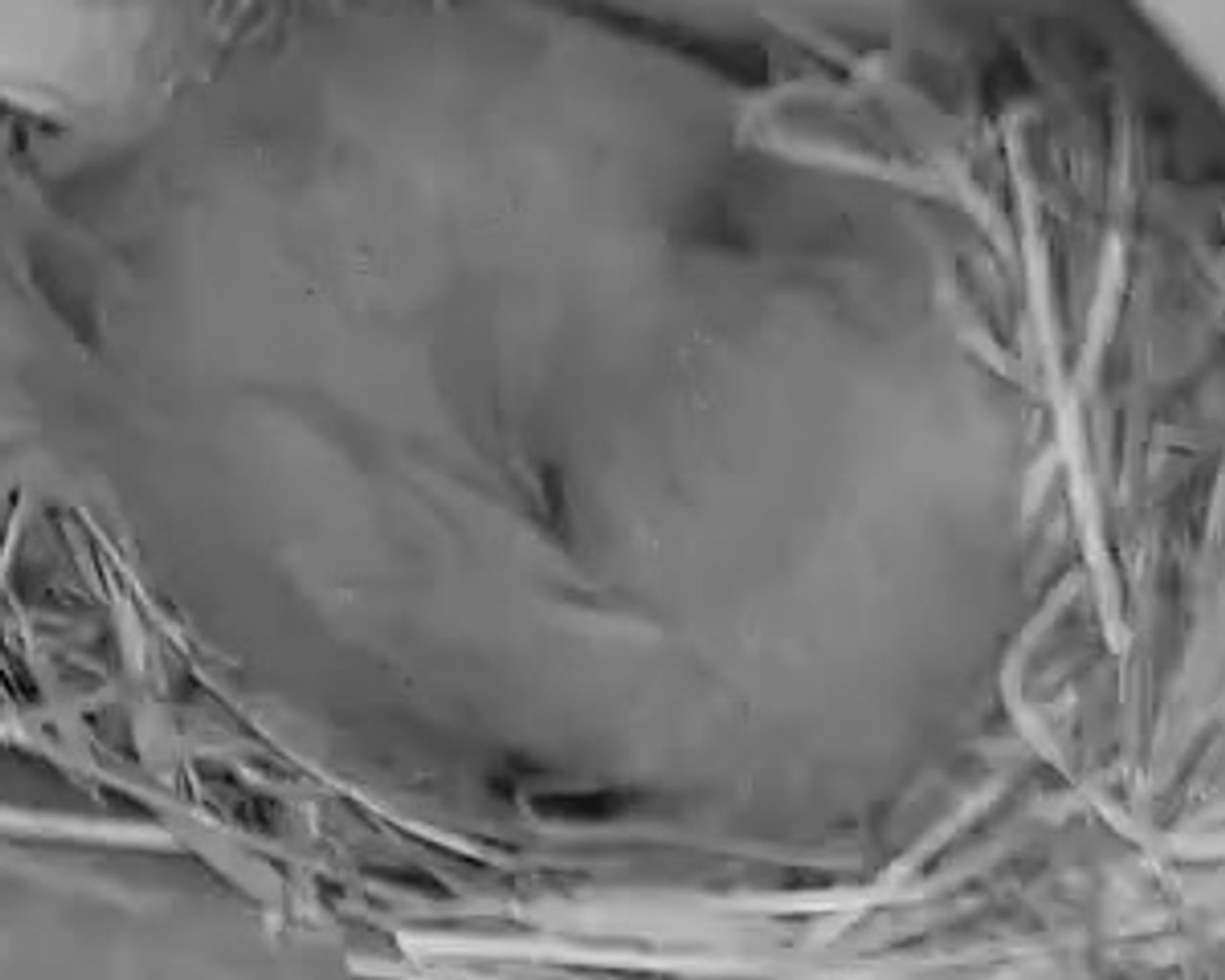
Field notes covering 7–9 May 2026
The three days spanned by these notes form a single biological event compressed into a long weekend: the turning of a clutch from still eggs to living, gaping young. What the cameras caught across seventy-two hours was not a sharp moment but a slow unfolding, each day layered over the last, each adding resolution to a picture that remained deliberately incomplete—the female’s body covering most of what we most wanted to see.
Thursday, 7 May
The overnight record begins with the female deep in the cup, nearly motionless, her silhouette consistent across frame after frame in monochrome infrared. That stillness is itself data: she is not restless, not foraging, not defending. She is holding the clutch through the dark hours by sheer metabolic commitment.
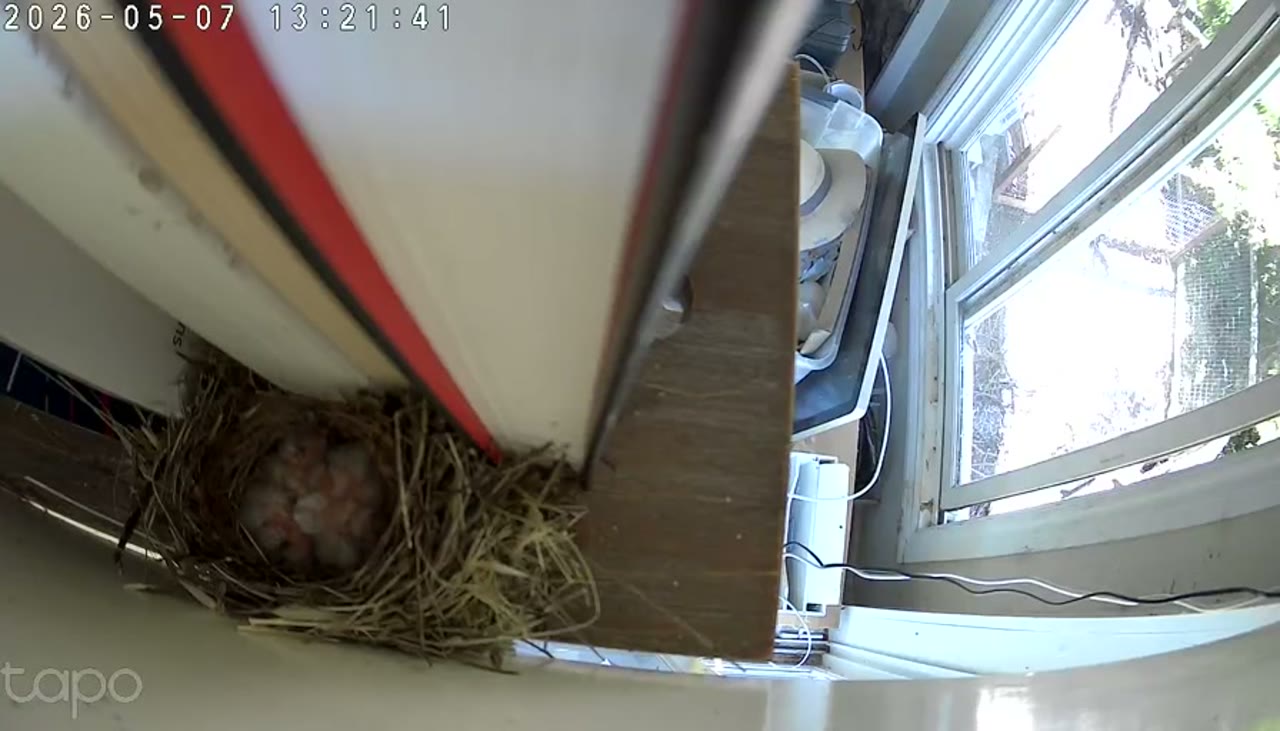
The first disruption comes at first light. At 13:48 UTC—early morning local time—the male lands on the rim while she shifts position, and in the brief gap between their bodies, three pale ovals are visible, their high NIR-albedo catching the infrared emitters like small mirrors. This is the clearest confirmed egg count across the entire three-day window: three. Minutes before and after, fragments of pinkish, naked shape also appear in the cup. The two kinds of objects—still eggs and newly hatched young—share the same nest cup. The hatch has begun, but it has not finished.
The male’s visits during this dawn hour are clustered: 13:47, 13:48, 13:49, 13:50 UTC in quick succession. He perches at the rim, faces her, and the beak-to-beak contacts suggest courtship feeding. He will play this role more urgently in the days ahead.
Friday, 8 May
The female does not leave the cup overnight. The IR footage through the early morning is a long, undramatic record of a small bird performing the most consequential work of her breeding season. The male appears at 13:27 UTC—red crown and chest bright even in interval frames—then at 13:28 at the rim while she briefly departs and reveals the cup contents before returning.
By mid-morning, the evidence is unambiguous: two chicks are visible in the cup, small, round-skulled, their skin the thin pink of the newly hatched. But even as chick clips accumulate, so do egg clips. At 11:14 local and again well into the afternoon, a pale oval with that same high NIR-albedo sits alongside living young. Hatching here is a process measured in hours, not a discrete event.
Three chicks are confirmed visible in the unoccupied cup by mid-afternoon. The male’s visits have taken on a different quality: in several clips the chicks are gaping—open-mouthed, insistent—and he responds. The courtship feed of the breeding period has become the provisioning feed of parenthood. That shift is the central event of Friday.
A human is briefly visible near the nest around 17:50 local, phone in hand. The female clears the cup for a moment and three gaping chicks are exposed. She returns quickly.
Saturday, 9 May
The female is on the nest when the record opens and still brooding when it closes. The cameras switch from IR to color near local sunrise, and the first color clip—around 06:25 local—delivers a small shock: three chicks and an adult in warm-toned flesh and olive after two days of grayscale.
The male visits at least fifteen times between 06:27 and 19:51 local, a rhythm of roughly forty to ninety minutes between arrivals. The interval is long enough that the female manages the cup alone through most of the day; short enough that provisioning appears continuous. The highest confirmed chick count in any single clip is four, recorded by the sunroom camera at 10:21:44 local during a male visit when the female briefly shifts and the cup opens to view.
Three clips—at approximately 12:15, 15:33, and 17:53 local—each show a pale oval consistent with an unhatched egg still present in the cup. Its NIR-albedo matches the eggs documented two days earlier. If this is the same object, it has persisted undisturbed for at least forty-eight hours alongside four living chicks. Whether it will ever hatch is not yet resolved.
Synthesis
The thread connecting all three days is the female’s body as instrument. She is the incubator before hatch, the brooder after, and across all three nights the single constant in the nest. The male’s role shifts in parallel: the clustered courtship-feeding visits of Thursday’s dawn become the provisioning chain of Friday and Saturday, visits escalating in frequency as more open mouths compete for each delivery.
What the data cannot yet answer is the final clutch outcome. Three eggs were confirmed visible on May 7. Four chicks were confirmed on May 9. At least one pale oval persists. The arithmetic does not yet close.