Field dispatch
Five Eggs, Three Nights: A House Finch Pair Settles Into Deep Incubation
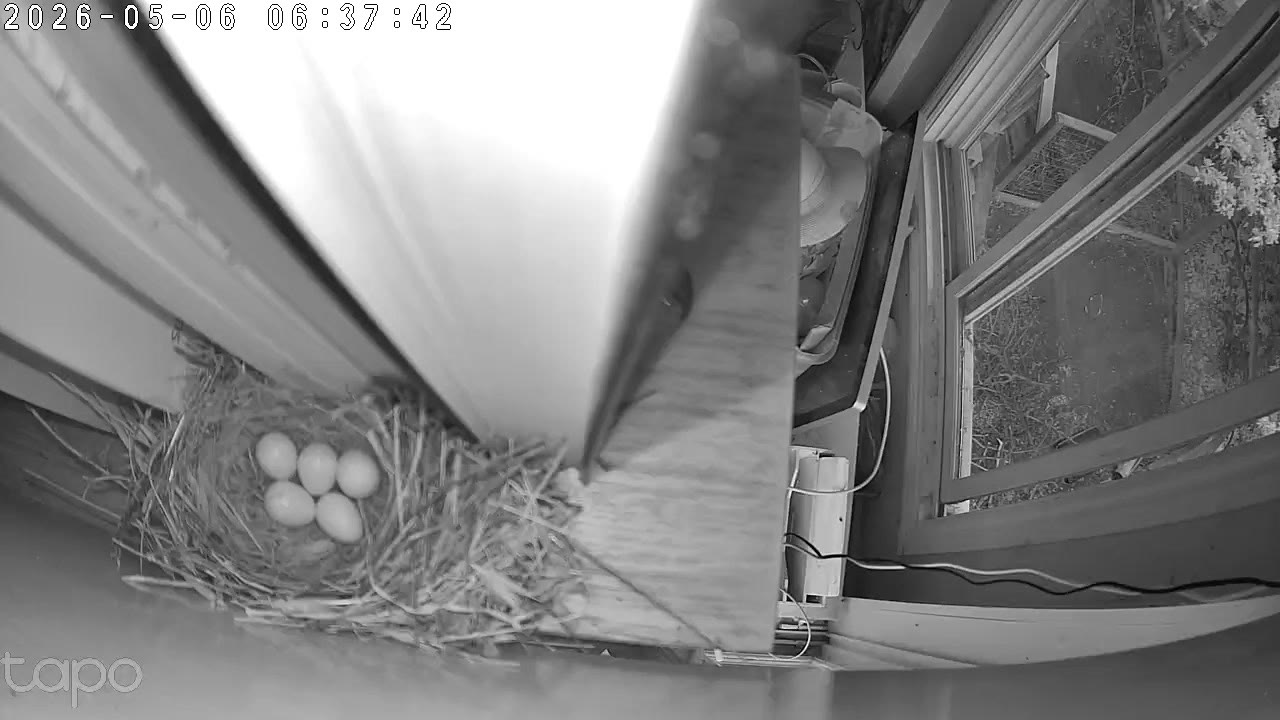
(Sunroom nest station — 2026-05-04 through 2026-05-06)
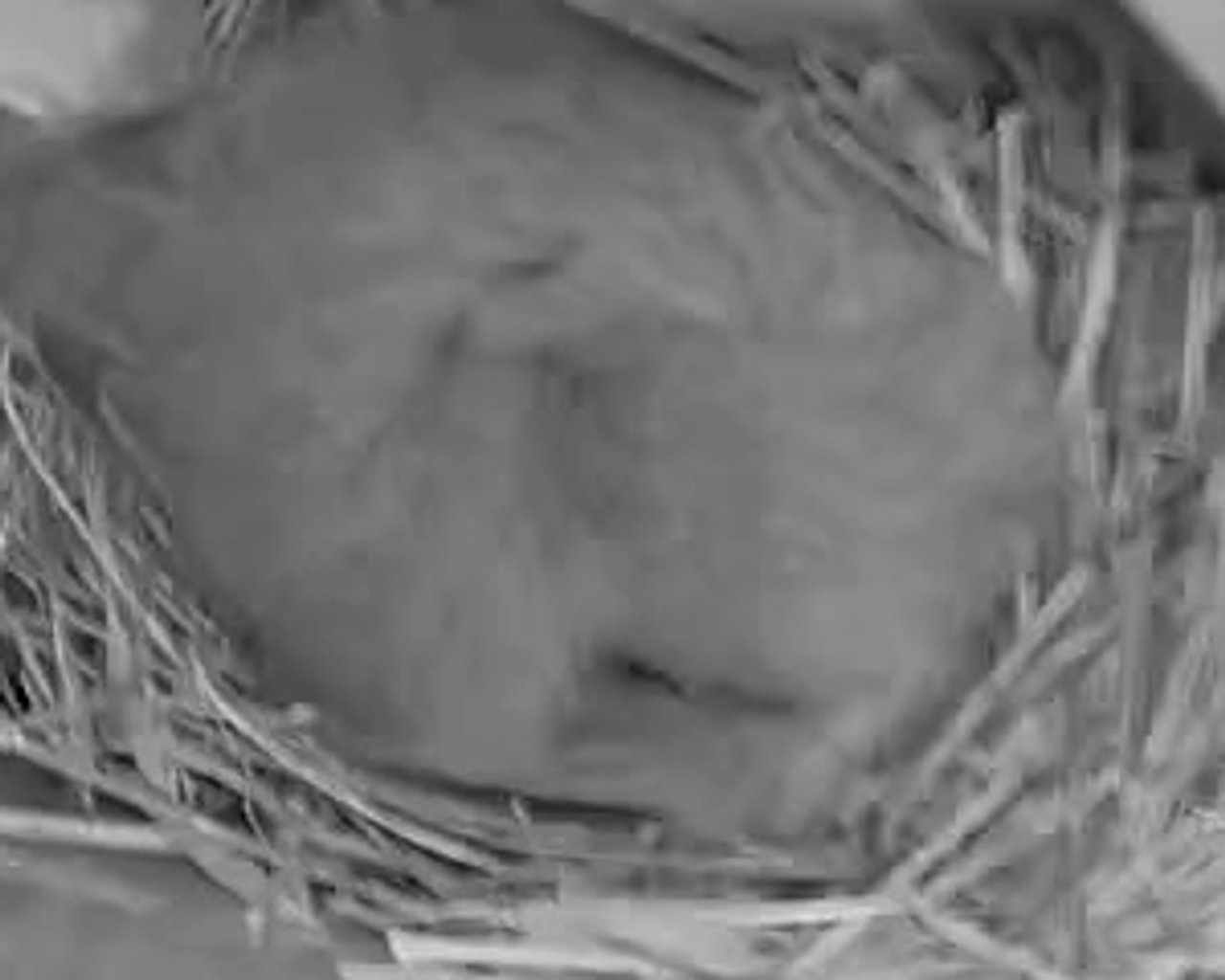
What strikes me most, reviewing three days of footage together, is how the pattern of incubation reveals itself not through dramatic events but through repetition and small deviations from routine. The female House Finch (Haemorhous mexicanus) has established a near-continuous overnight vigil: from roughly 19:40 onward each evening through the following dawn, she barely lifts from the cup. The IR frames across both Tapo and sunroom cameras show the same low-contrast silhouette — head tucked, body filling the nest bowl — night after night with the reliability of a tide.
Monday, May 4
The fourth was unusual before it was anything else. The male, who typically confines his nest visits to courtship feeding — brief stops at the rim to transfer food to the incubating female — was repeatedly observed descending into the cup itself. At 13:59 he was there long enough to be caught across multiple frames, departing to reveal all five eggs. At 14:30, at 15:54, at 16:40, at 17:15 — each time the clip resolved around him sitting where the female usually sits. Whether these contacts represent extended food transfers, nest inspection, or something we lack a clean behavioral label for, they are remarkable for their frequency.
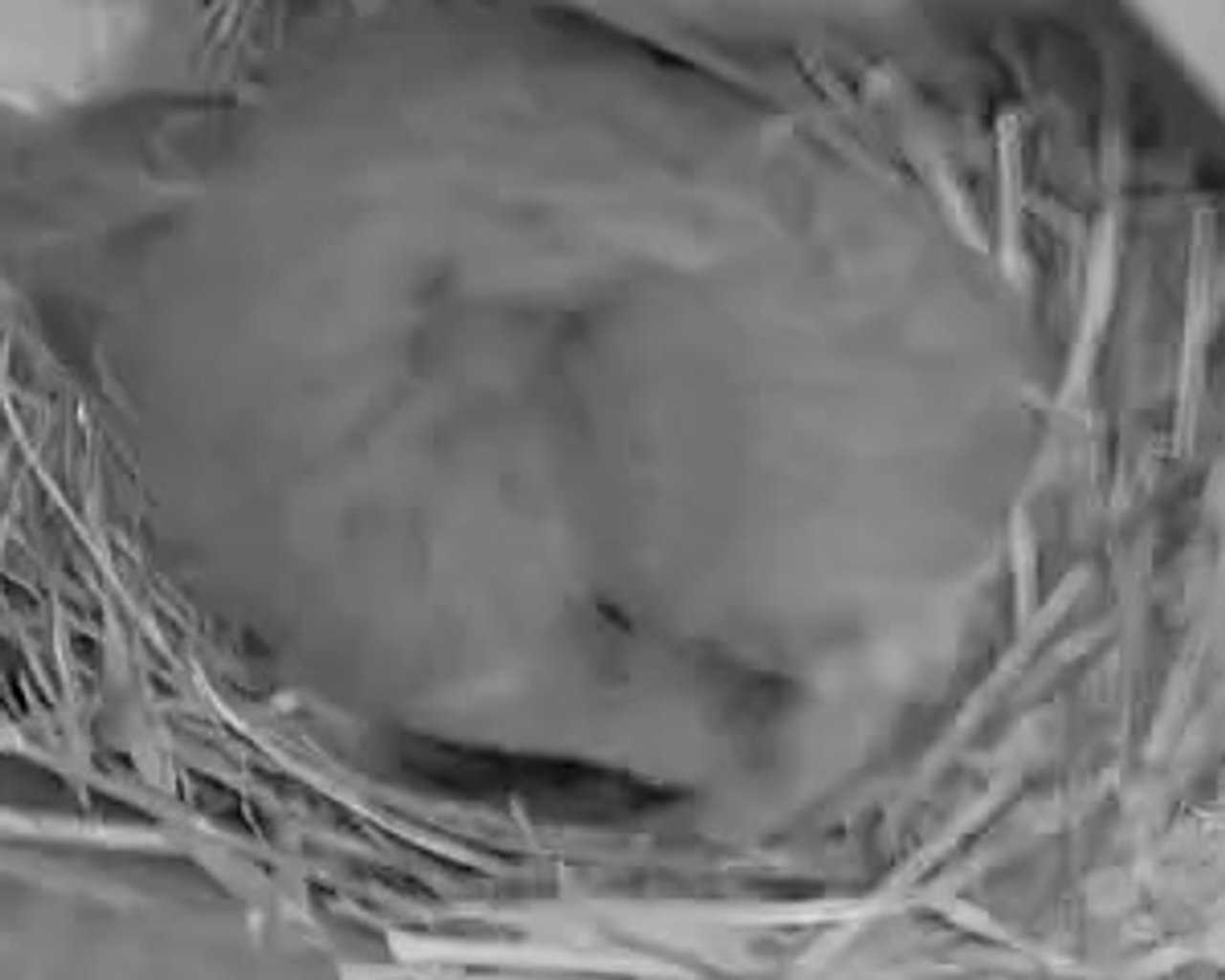
The female remained the axis around which all of this revolved. She was briefly displaced by human activity in the sunroom between 18:32 and 18:38 — the nest stood empty during that window — but by 18:58 she had returned, and by 19:52 she was committed to the night shift, staying on continuously through the remaining footage.
Tuesday, May 5
By the fifth, the male’s cup-sitting had largely resolved into conventional courtship-feeding behavior: arrivals at the rim, brief interactions, departures. He visited at least eight distinct times — around 07:01, 08:57, 10:13, 12:00, 13:27, 14:52, 16:14, and 18:05 — each time delivering food and moving on. The female’s response was to stay put, or in a few cases to step briefly off the nest for recesses of two to four minutes.
The cleanest egg view in three days came at 06:52: the female’s brief dawn recess left all five eggs exposed to the Tapo close camera. Confirmed — clutch holds at five. The pale surfaces registered their characteristic NIR-albedo distinctly enough in the monochrome frame to count without ambiguity. After that, she was back in the cup through most of the day and the entire night, interval footage showing no breaks past 20:20.
Wednesday, May 6
The sixth was defined by its overnight frame. In the hours before dawn, the female is present in every clip — tapo_motion, sunroom_interval — a nearly motionless shape. A brief gap at 03:52 (empty cup, eggs visible) is the only interruption before she resettles. This pattern now feels established: the female does not leave the eggs during the dark hours except for recesses brief enough that the eggs are unattended for only minutes.
Daytime brought more structure. Courtship-feeding visits clustered in mid-morning and late afternoon. The most sustained male presence ran 16:40–16:53 — thirteen minutes at the rim or on adjacent books — while the female incubated below. Five eggs confirmed again during multiple recesses.
Pattern across three days
The behavioral arc from Monday through Wednesday bends toward consolidation. The male’s cup-sitting on May 4 — notable across at least seven separate clips — gave way by May 5 and 6 to the more typical male role: attentive provisioner, rim visitor, perch-and-depart. Whether that shift reflects behavioral settling on his part, or simply fewer overlaps between his arrival timing and the female’s off-nest recesses, the data does not resolve cleanly. What it does show is a pair that has found its rhythm: her on the eggs through every dark hour, him circling the edges by day, the clutch of five holding steady across three days of deep incubation.