Field dispatch
Five Eggs Hold; Incubation Deepens Through Three Spring Days
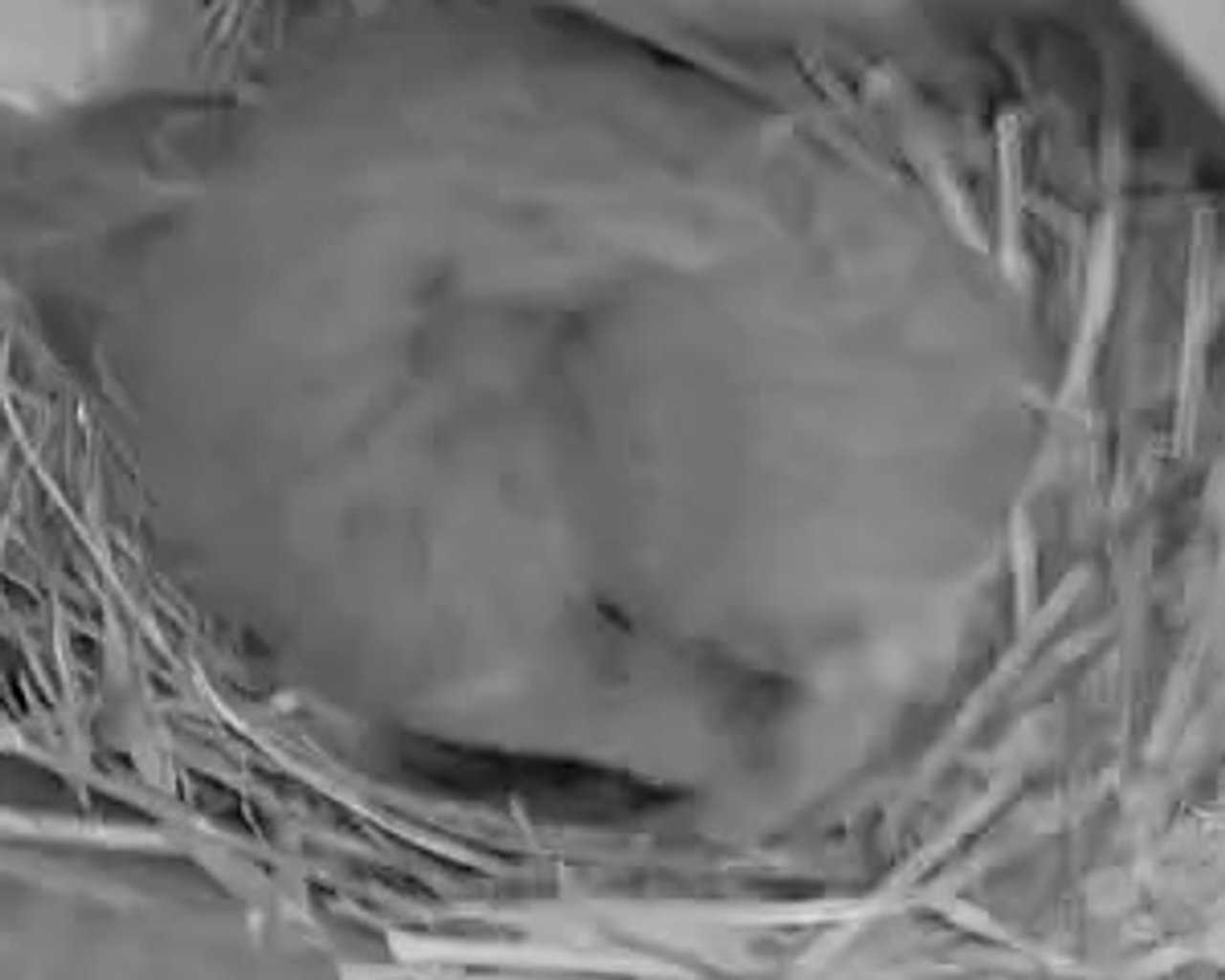
What strikes me most, reviewing three days of footage end to end, is the architecture of stillness the female has built around herself. From the overnight frames of May 4 through the pre-dawn hours of May 6, she is almost always there — a low, rounded shape in the nest cup, barely distinguishable from the woven material itself. The camera catches her shifting once, tucking her head, perhaps lifting a wing to resettle — and then nothing again for another hour. This is the work of incubation: radical, unspectacular patience.
Monday, May 4. The day was defined, on the surface, by the male’s high-frequency visits. He appeared at or near the nest at least seven distinct times between morning and dusk — perching on the shelf below, touching the rim, briefly settling into the cup during the female’s recesses. House Finch males do not incubate; what the camera documents is something more nuanced. He operates at the edge of the nest, restless, bringing food, sometimes overlapping with her return so closely that his body occupies the cup for a few frames before she displaces him. This is courtship feeding at its most intensive, not shared incubation duty. Around 18:32, a human moved through the sunroom; the cup sat empty for several minutes. She returned before 19:00 and was on the eggs through the rest of the night.
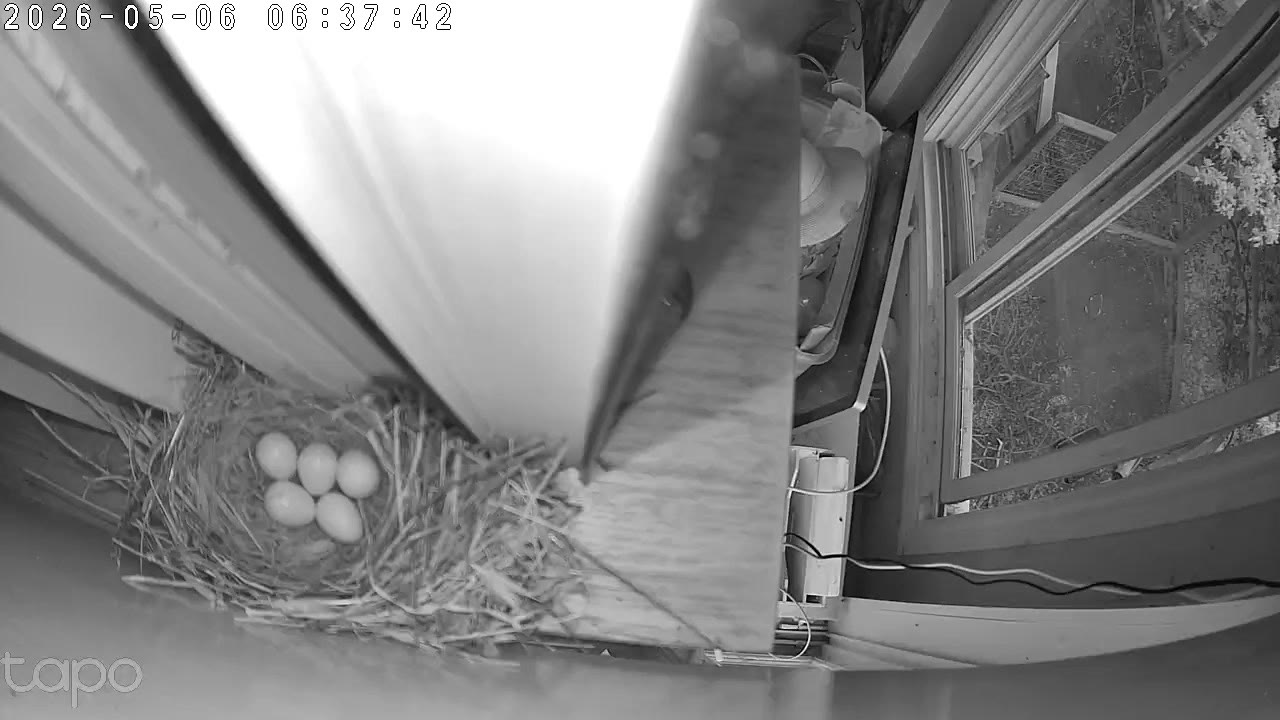
The five eggs confirmed themselves during her morning and afternoon recesses — the cleanest views of the clutch across any of these three days. In the IR footage, each egg reads as a small, high NIR-albedo oval against the darker nest cup material, consistent and unchanged across the full period.
Tuesday, May 5. If Monday was defined by the male’s energy, Tuesday belonged entirely to the female’s rhythm. She broke from the eggs at 04:48, briefly, then stepped off again at 06:52 — the clearest five-egg view in days, clutch count holding at five. The male visited at least eight times through the daylight hours, each interaction at the rim consistent with food transfer: he arrives, she tilts toward him, he departs within two minutes. Between those visits she incubated for stretches of nearly two hours without interruption. The longest continuous on-nest window ran from approximately 12:08 to beyond 14:50. By 20:20 she was tucked in for the night, IR clips showing her motionless through the end of the recording period.
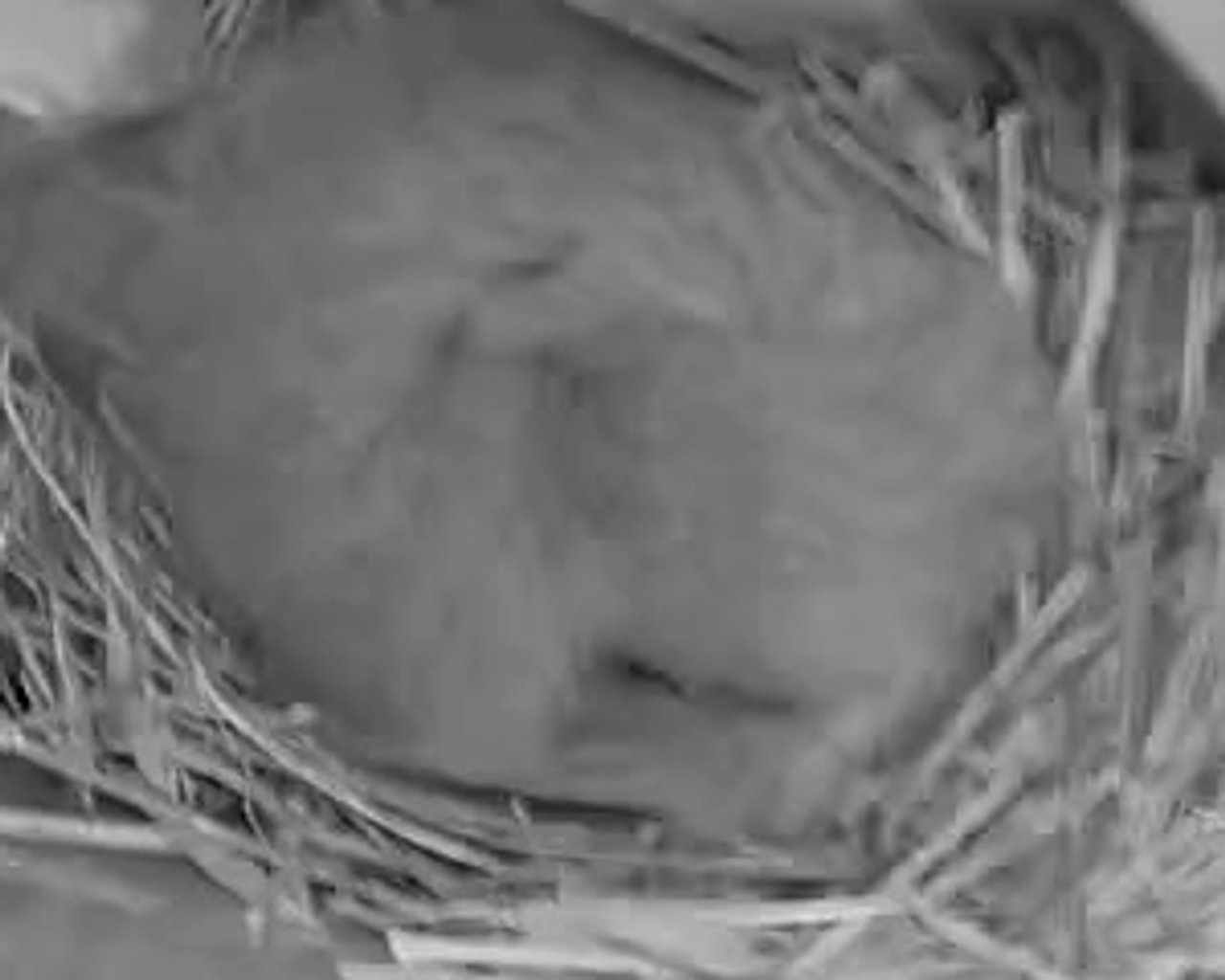
What the three-day record makes clear is the absence of anything going wrong. No second adult at the nest, no evidence of egg disturbance, no prolonged absences. The pattern is almost mechanical in its regularity — and that regularity is itself data. She is not stressed. She is not being displaced. She is deep into incubation, and the system is working.
Wednesday, May 6. The overnight transition from Tuesday carried forward without interruption. Both cameras confirm continuous incubation through the early dark hours, with a brief cup vacancy around 03:52 — another eggs-visible moment — before she settled back in. The first daylight recess came at 06:36, again revealing the five eggs, and the male was at the nest by 07:10 for the day’s first courtship feeding.
The most sustained male presence of the entire three-day period fell on this afternoon: roughly thirteen minutes between 16:40 and 16:53, with him perched on the rim or the adjacent books while she sat. This is the pattern intensifying — as incubation progresses toward its second week, male attendance tends to increase rather than taper. Whether this reflects something about the developmental stage of the clutch or simply the accumulated bonding behavior between mates, I cannot say from footage alone. But across Monday, Tuesday, and Wednesday, his visit frequency is clearly not declining.
Three days. Five eggs. One female who barely left the cup. Incubation continues.