Field dispatch
Five Eggs, One Male, Three Days of Faithful Vigil
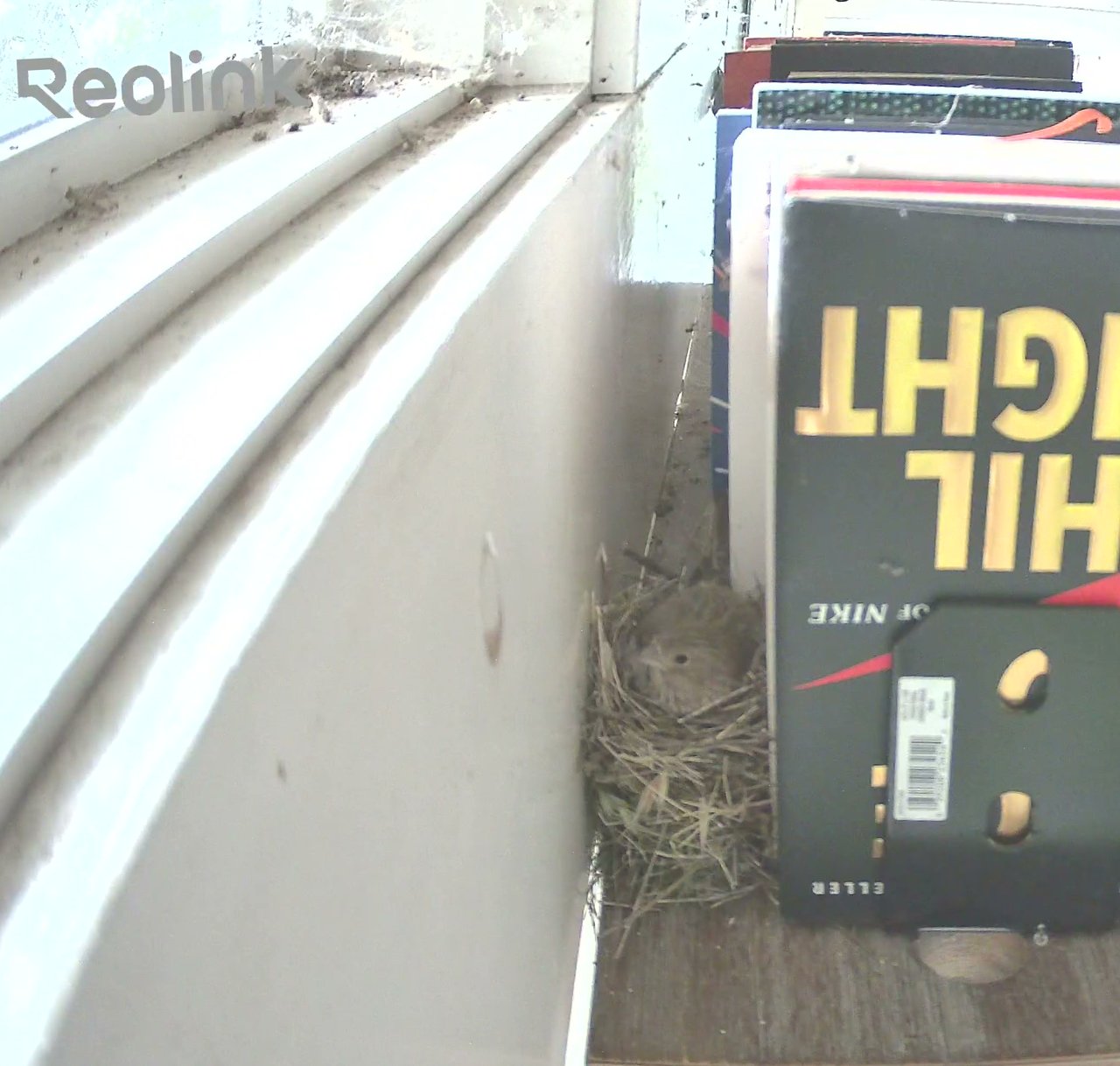
The three days from April 28 through 30 form a coherent chapter in this nest’s story, held together by two recurring motifs: a female anchored to a cup of five eggs through long, patient bouts, and a male who cannot quite stay away.
Tuesday, April 28 is a day of transition. The old bookshelf camera — the nest’s original eye — hands off to the Reolink at dusk, both sensors catching the same motion event at 19:55 from different angles. That overlap is a small gift to the record; the handoff appears clean. What the old camera captured in its final hours is a day of rhythmic on-off-on: female on the cup at 06:00, absent through the early morning, back at 08:23, cycling through a series of incubation bouts and short recesses all the way into afternoon.
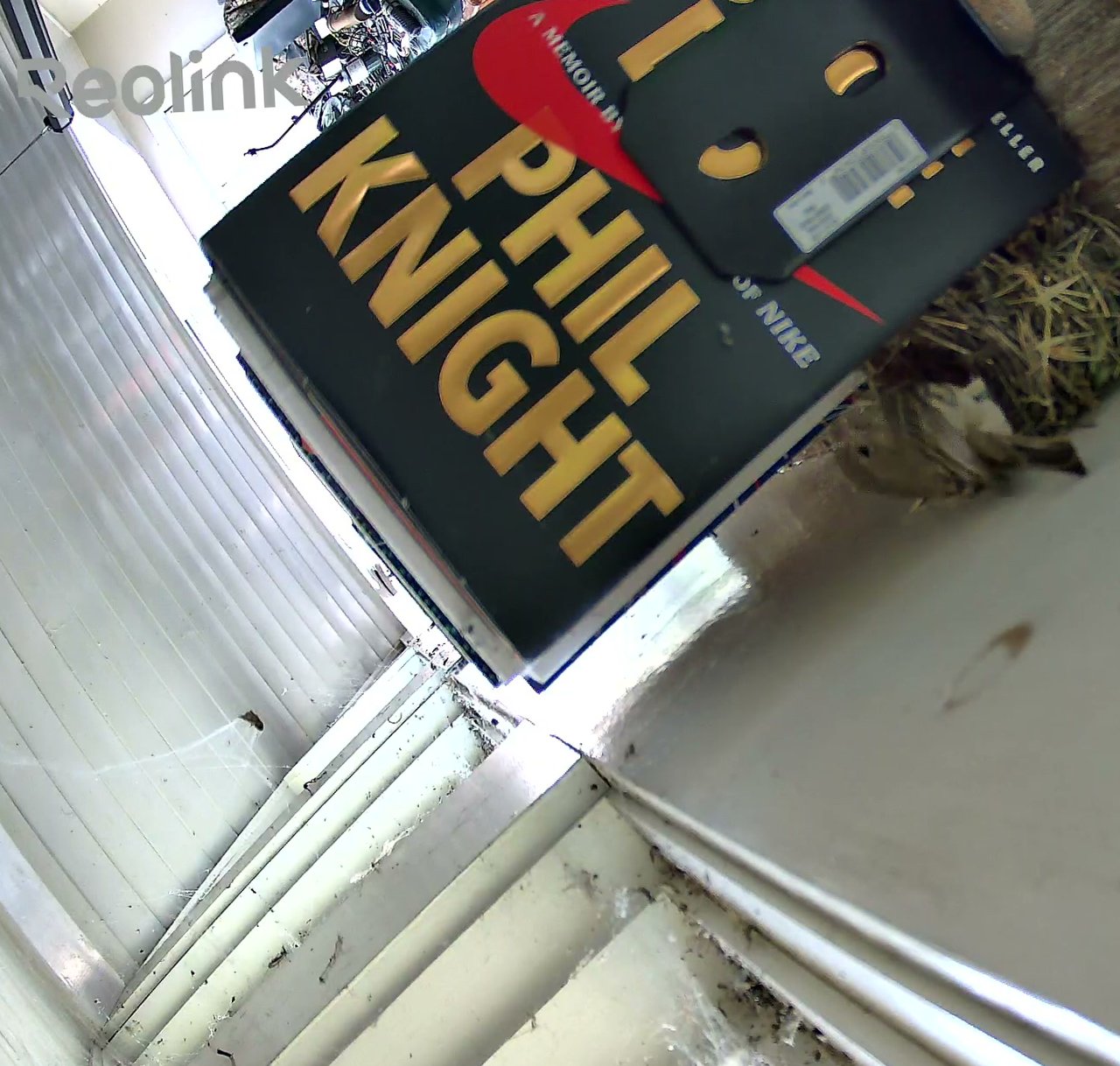
Two activity clusters bracket the afternoon. Between 15:24 and 15:30, six motion events fire in six minutes; the logs also show a person in the sunroom handling the camera, so some triggers here are human disturbance rather than avian activity, and the field of view is briefly unusable. The second cluster is biological: seven events in seven minutes from 18:25 to 18:32, the classic shape of a female settling for the night while her partner makes a last courtship-feeding pass. By 21:00, with the female on a brief recess, the bookshelf cam resolves the cup clearly — five eggs, pale blue against the nest lining. Confirmed clutch. The Reolink’s first overnight clip at 20:01 shows the female back in a low incubation posture, the new camera’s first quiet frame of a vigil already well underway.
Wednesday, April 29 presses the same template, but the male’s presence intensifies.
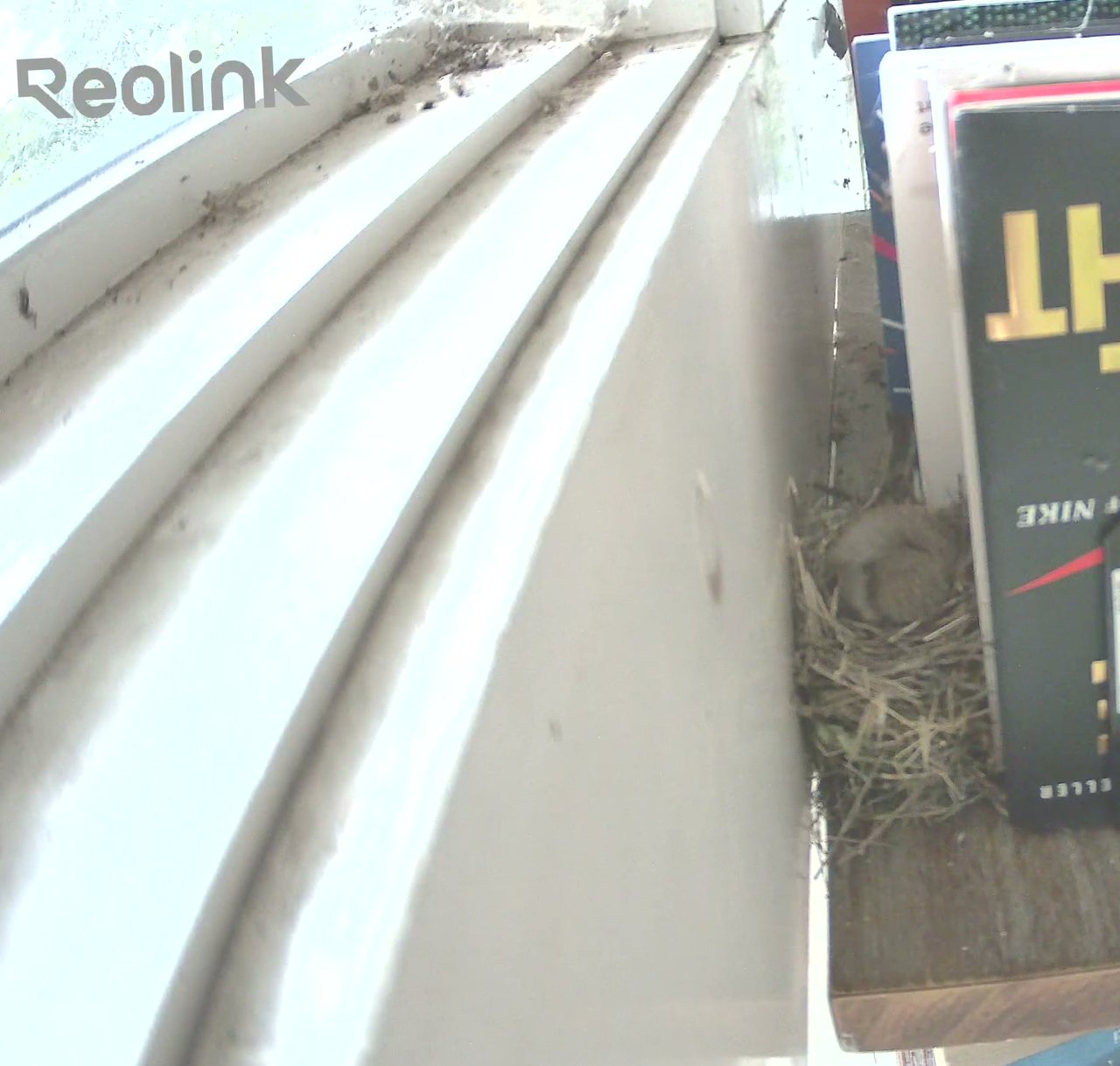
Dawn is tidy: female on the cup at 06:11, two brief recesses, returned and settled by 06:38, steady through 09:35. The mid-morning shifts the rhythm. At 10:33 the cup is empty; the male arrives almost immediately for what reads as a courtship-feeding visit. He reappears independently around 11:28–11:33 — a nest check or another feeding pass during the female’s recess. By 12:43 they are at the nest simultaneously, female incubating, male at the rim, and he drops to the shelf below where he holds for the remainder of the clip. That scene repeats all afternoon. Between 16:35 and 19:45, six separate motion events log him moving from cup to rim to shelf — orbiting. The NIR-albedo of his head and breast in the infrared frames is conspicuously high, that saturated carmine signal reading clearly distinct from the female’s even-toned brown. She does not leave. Long afternoon bouts, last clip at 20:02 with the female still settled.
One caveat worth repeating: the current camera angle shows only two eggs. The clutch is five, confirmed in the bookshelf-cam frame at 21:00 on April 28. The others sit outside the new frame. This should be noted in every entry until a better angle resolves the full count.
Thursday, April 30 deepens the pattern rather than changing it.
Morning opens with the pair together at the cup, the male visiting while the female incubates. She takes a recess around 08:53, leaving the eggs briefly unattended — normal behavior for House Finch females, who typically forage once or twice a day in short windows. The afternoon sharpens the picture of the male’s schedule: visits at 15:09, 15:53 when the cup is empty and the NIR-albedo of the pale shell face reads high and even against the nest fiber, then 17:09, 18:21, and twice at 19:18. He is consistent. He is close. The female returns each time and settles.
Across all three days the same architecture holds: the female carries the incubation load entirely, the male supplies food and proximity. Activity concentrates at the day’s edges — dawn transitions and pre-dusk settling — while midday is the quietest window. The afternoon escalation in the male’s visits on April 29 and 30 likely reflects foraging efficiency in late-day light. The mid-afternoon human disturbance on April 28 was the week’s single anomaly; the pair returned to baseline within hours.
Five eggs. House Finch incubation runs roughly twelve to fourteen days from the last egg laid. The watch continues.