Three Days, the Pair Settles In
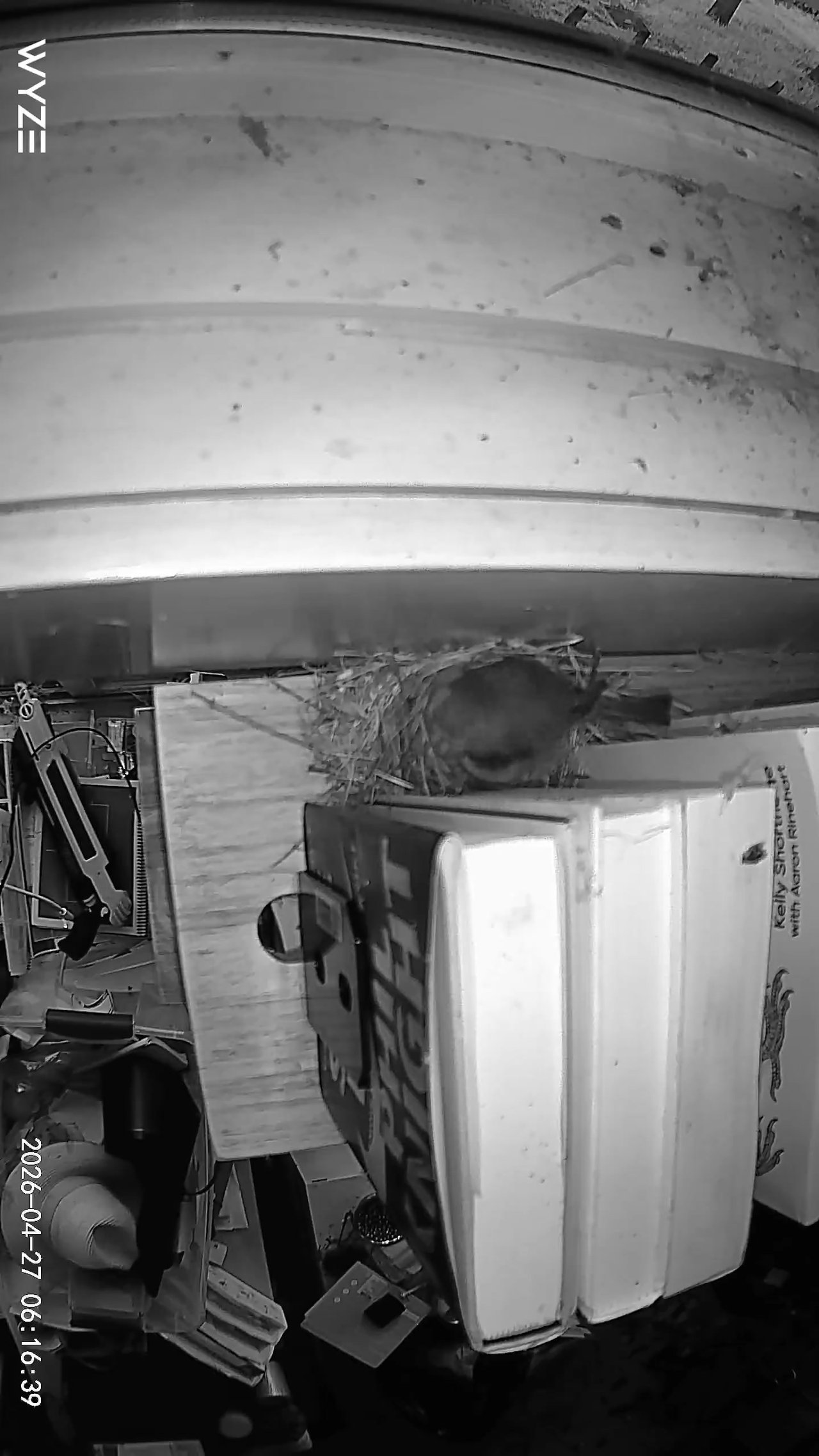
A pair of House Finches built a nest in a cup of dried grass on a bookshelf in our sunroom. The cup faces a wall of windows; the rest of the household goes about its business a few feet away. Three days of overlapping camera feeds, iPhone stills, and overnight IR gave me my first usable look at how the pair are working the clutch.
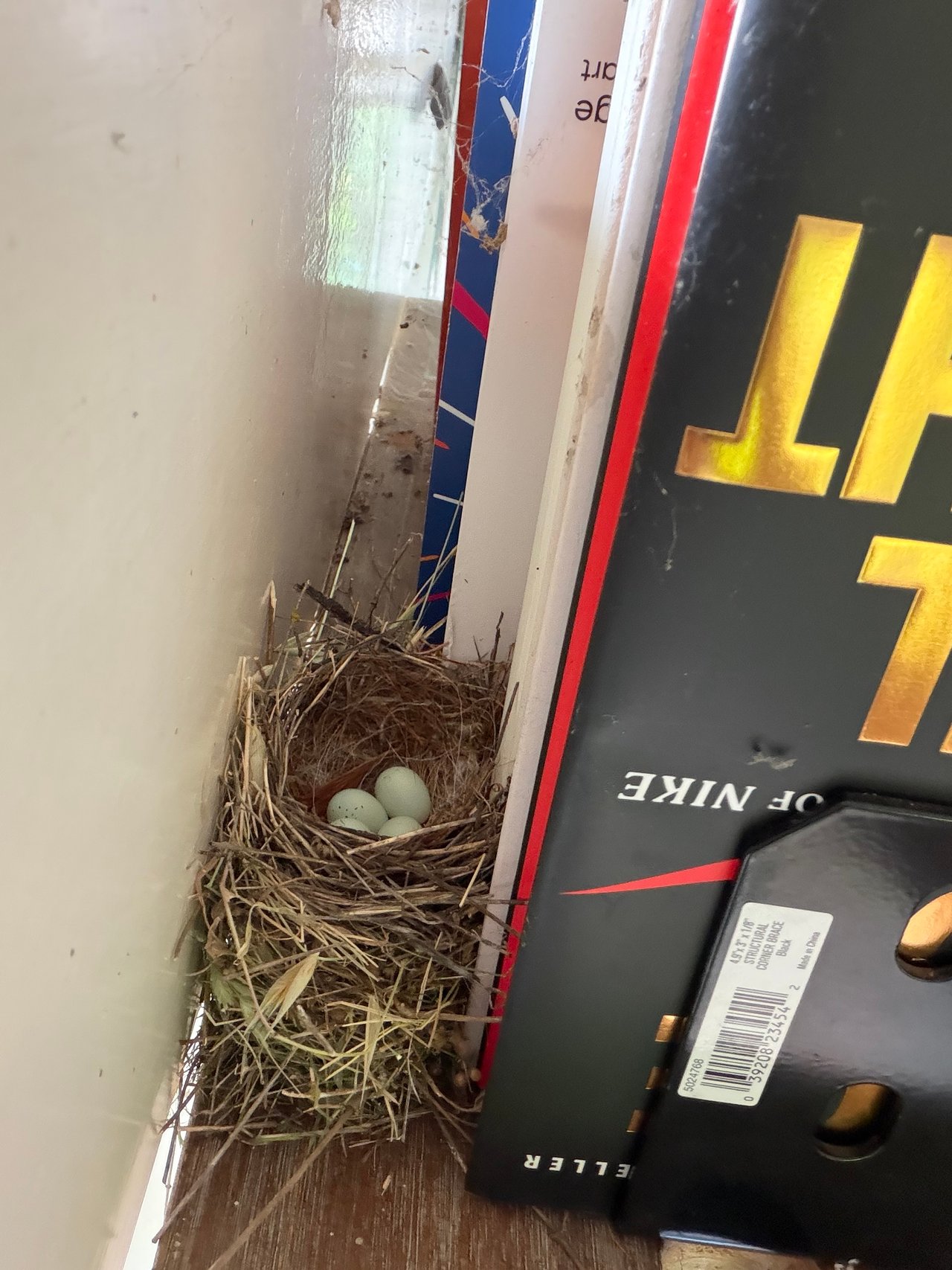
April 25. First clean view of the eggs at 16:06 — the female was off, foraging. The iPhone catches pale-blue speckled eggs in the cup, lit raking from the side. The visible count flickers between two and four depending on the angle, but the cup is deep and the dried grass at the rim hides what the camera doesn’t catch from a particular position. The eggs aren’t moving; my counting is.
By 21:13 she was back. The bookshelf IR camera held her at 22:16 as a low-contrast shape filling the cup, head tucked — committed for the night. In IR the eggs disappear under her, but on earlier empty-cup frames they show up clearly: bright pale ovals against the dark fibrous interior of the nest.
April 26. Five eggs. The first day I could count the full clutch — multiple bookshelf-cam clips during her brief absences gave the same answer: five small bright ovals, evenly spaced, undisturbed.
The male showed up. Between 13:41 and 20:07 he passed the nest at least five times — perching on the books above the cup, dropping briefly to the shelf below, hovering at the rim. Courtship feeding cadence: arrive, exchange, leave. His visits clustered in the early afternoon and again near dusk.
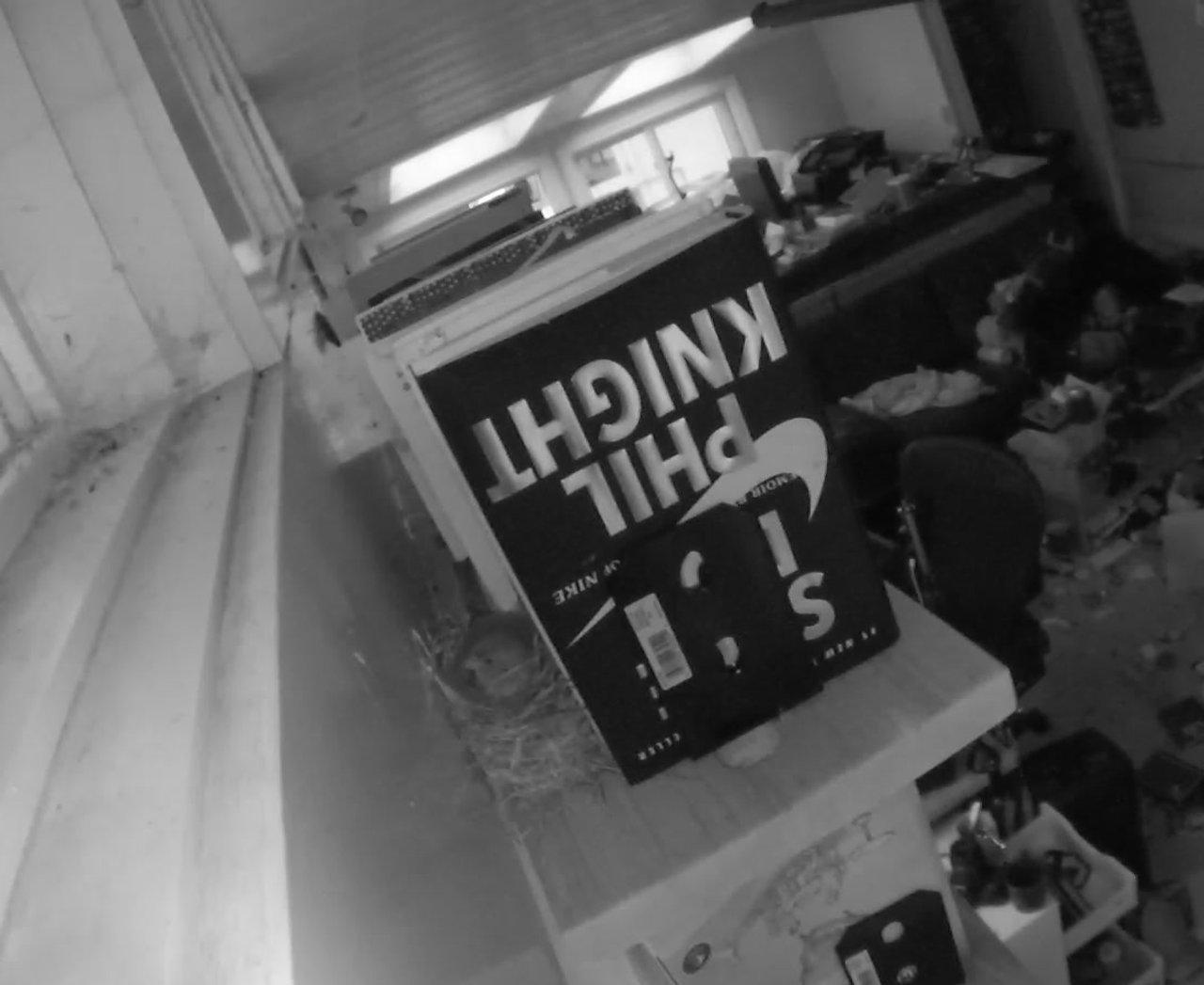
Around 13:20 two people moved through the sunroom for about ten minutes — one of them close to the bookshelf with a phone. The female stayed on the cup through most of it. She did step off during the closest approach, but came back. The pair tolerate us at this distance.
April 27. The male’s visit pattern resolved into clusters. Three events at 08:34, 08:36, 08:37. Three more at 10:15 through 10:17. The same shape repeats at 11:12, 14:11, 15:45 — three quick passes in two minutes, then a long quiet stretch. Approach, deliver, withdraw, double back to confirm, then off until the next round.
The Wyze close-up — much tighter than the bookshelf camera — confirmed what the wide angle had been hinting at: by 06:16 she was already deep in the cup, sitting low. From dawn through 09:16 the brooding posture barely shifts. She is on these eggs.
Two motion triggers at 21:21 and 21:22 — brief, in otherwise still darkness. Could be light from another room, a moth on the IR emitter, or the female shifting her weight against a draft. Worth flagging; not worth a theory yet.
Across the three days. She’s on the cup by 21:00–22:00 each night and still there at first light. The male’s visits got more frequent and more rhythmic from Saturday through Monday. Two humans in the sunroom registered as a brief disruption, not an abandonment. Five eggs since the 26th, unchanged.
If the last egg was laid around April 25 or 26, hatch lands somewhere in the second week of May. Ten days out. The work now is just watching.